

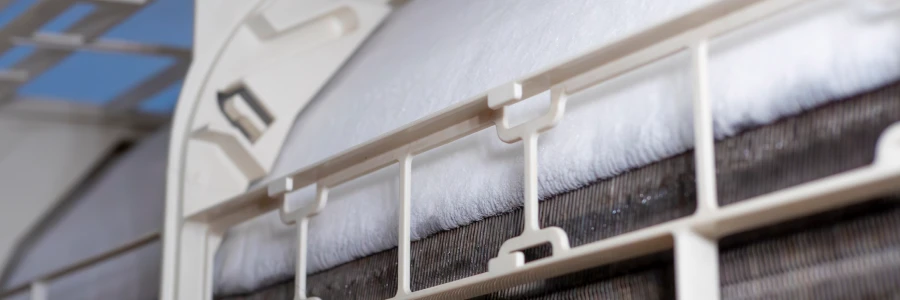
Finding ice on your air conditioner on a hot day seems counterintuitive. However, this common issue is always driven by a sudden drop in internal coil temperature.
An air conditioning unit freezes up when the indoor evaporator coil drops below freezing (32°F). During normal operation, the evaporator coil inside your indoor unit relies on warm air passing over it to absorb heat. Moisture in the air condenses and freezes on the metal, creating a block of ice that stops cool air from flowing.
4 common reasons your AC is freezing up
Let us look at the common reasons why your AC is freezing up and how to get your cooling system back to normal.
Airflow restriction from dirty filters and blocked vents
Maintaining proper airflow prevents your indoor coil from getting too cold. A dirty air filter is the most common culprit behind a frozen air conditioner. When dust and debris clog the filter, airflow drops significantly, causing the evaporator coil temperature to plummet. Without warm air passing over the metal, ice forms rapidly on the coil.
Changing air filters every 30–90 days prevents freezing, so you should make filter replacement a regular habit. Additionally, ensure supply vents and return grilles remain open and unobstructed by furniture, as closing vents in unused rooms starves the evaporator coil of warm air.
Refrigerant leaks and dropping system pressure
Your AC system requires a specific amount of chemical coolant to function. Because refrigerant operates in a closed loop, any drop in fluid level stems from a leak. This loss of refrigerant causes internal pressure to drop, driving the evaporator the coil temperature below freezing and encasing the metal in ice. Common indicators include weak airflow or hear a faint hissing sound near the refrigerant lines.
Resolving a refrigerant leak requires professional repair performed by a qualified HVAC technician to seal the breach and recharge the system.
Mechanical failures and dirty internal coils
Beyond issues with filters and coolant, internal component failures can trigger a frozen AC unit. If the indoor blower motor fails, air stops moving across the evaporator coil, causing the remaining thermal energy to drop and ice to form instantly. Similarly, a malfunctioning thermostat or a faulty or broken thermostat can force the compressor to run continuously without running the blower fan. Finally, dirty evaporator coils can serve as an insulating barrier, preventing the refrigerant from absorbing indoor heat and leading directly to ice buildup.
To resolve these issues, have a qualified technician test the blower capacitor and motor, recalibrate or replace faulty thermostat wiring, and perform a professional chemical coil cleaning to restore proper heat transfer.
Running the system during cool nights
Running an air conditioner during cool weather can trigger rapid coil icing. Central AC systems are designed to operate when outdoor temperatures remain above 60°F to 65°F. If ambient outdoor temperatures drop below this threshold, such as during cool summer nights, system pressure plummets, causing the indoor evaporator coil to freeze.
To prevent this, raise your thermostat setting or turn off the AC on cool nights. If you must run your system in cold weather, have an HVAC technician install a low-ambient control kit to safely managed cold-weather operation.
What to do if your air conditioner coils freeze
You need to act quickly to prevent permanent damage to your HVAC system. Turn off the AC immediately if it freezes to protect the compressor from burning out. Next, set the thermostat fan to “on” to help thaw ice naturally using the ambient air in your home. A frozen AC may take one to three hours to thaw; make sure to place some towels around the unit to catch the melting water. Once the visible ice melts completely, check the filter and replace it if necessary. Call a professional if the AC keeps freezing after a filter change.
Keep your cooling system running efficiently
Routine maintenance catches small problems before they escalate into expensive AC repair emergencies. Having a qualified HVAC professional clean your outdoor coils, inspect the condenser, and check system pressures prevents refrigerant leaks and mechanical wear. Professional maintenance also prevents refrigerant leaks and low levels from ruining your equipment, keeping your home perfectly comfortable all summer.
Are you tired of dealing with a frozen AC? Contact Certified Comfort today to schedule a comprehensive inspection and get your system running efficiently again.